Every fantasy manager makes mistakes. You simply aren't going to make the perfect move at the perfect time every single week.
But there is a massive difference between the managers who consistently compete for championships and the ones who just donate their buy-in every year: the best players review their own tape.
Reflecting on the previous year's blunders is the single most effective way to set yourself up for a stronger season. When my league ended, I didn't just close the app and move on. I went back through my transaction log and draft board to see exactly where my strategy broke down, where I got lucky, and where I overthought things.
What I found was a series of highly specific, fixable flaws—along with a few solid wins—that have completely changed how I'm approaching the board this year.
If you want to play smarter this season, here is the honest breakdown of the mistakes that cost me my league, and the exact blueprint I'm using to draft in 2026.
Part 1: The Fatal Flaws
Mistake 1: The "Shiny New Toy" Syndrome (Rookie Hubris)
Based on how my draft was flowing, I saw a lot more value in prioritizing wide receivers in the first round or two. I felt great about my pass-catchers, but I still needed starting running backs.
That's when I fell into the rookie trap. I had seen a data point earlier in the off-season showing that 2nd-round NFL draft RBs have roughly a 50% chance of hitting as a valuable fantasy starter. My logic felt bulletproof: if I just drafted RJ Harvey and TreVeyon Henderson in the 3rd and 4th rounds, ideally, at least one of them would hit and I'd have my RB1.
What I completely failed to understand was the NFL learning curve.
It takes real time for rookies to get acclimated to the league—learning pass-blocking schemes, adjusting to the speed of defenses, and earning their coach's trust. Because I was relying on them as my immediate starters, I was crushed in the early season. For the first month of the year, rookie running backs are likely to not perform as well as you'd like, and those early losses set my season on fire before it even really started.
Mistake 2: The Spreadsheet Trap (Ignoring the Tape)
This isn't a mistake that burned me directly, but rather a slow realization over the span of the season about how much of an edge I was leaving on the table.
For most of the draft process and early season, I was a spreadsheet manager. I relied heavily on advanced metrics to evaluate players and was largely oblivious to what was actually happening on film. But I had one major wake-up call that proved the "tape watchers" right.
I had been following analyst Matt Waldman, who watches a ton of tape. He had pointed out how underrated Michael Wilson looked on film, long before the numbers reflected it. I tucked that nugget of information in the back of my mind. So, when the news dropped on November 12th that Marvin Harrison Jr. was out after having an emergency appendectomy, I didn't wait for the target-share projections to update. I immediately scooped up Wilson on waivers—and it paid off massively as he went on an absolute tear.
But while I nailed that one transaction, it made me realize how many other players I was missing out on. There is a massive edge to having someone evaluate players based on tape, because they can spot underrated guys who "pop" on film before the rest of the league catches on.
Mistake 3: "Overcooking" My Roster (The Bye-Week Brain Fade)
When the Seattle Seahawks had their bye week, my thought process was casual: Oh, I can drop them and figure things out after. When waivers cleared, I actually had the chance to scoop them back up. I had the FAAB to do it, but I talked myself out of it.
I wanted to save my remaining budget just in case there was a massive, late-season breakout player on the wire. To complicate things further, Seattle had just suffered a string of injuries to key defensive players, which made me even more nervous about reinvesting in them.
While letting them go didn't completely tank my season, it taught me a valuable lesson about my management style. I realized that sometimes I can "overcook"—meaning I do way too much instead of just keeping things simple. Picking my reliable defense back up was the easy, correct move, but I over-managed the situation.
Part 2: The Silver Linings
Win 1: Trusting the Projections (But Knowing When to Pivot)
It wasn't all bad news. I had read a study before the season mentioning that ESPN has the best, most accurate game-to-game projections. So, I swallowed my pride and used their data as the primary baseline to set my lineups. It isn't the sexiest strategy, but most of the time, strictly using these projections paid off.
The major caveat here was roster management. I made sure not to blindly pick up players on the waiver wire just because they had slightly higher weekly projections than the guys at the bottom of my roster. I knew waiver wire projections were less reliable, and chasing them would just mess up my long-term roster construction.
But the real win was knowing when to ignore the math and trust my gut. For example, in Week 17, the app was telling me to start Drake London. He had solid projections, but my thought process was that he was coming back from an injury, and the team had no real incentive to have him go all out. I ignored the projection and left him on my bench.
London ended up putting up a disastrous 0.9 points that week. I had put Mike Evans in his place, who put up 10.6 points. Trusting the baseline projections got me through the season, but knowing when to apply context saved my matchups.
Win 2: Mastering the Mock Draft (Preparing for Chaos)
Drafting is an active skill, and going in cold is a recipe for disaster. One of the best things I did leading up to the season was utilizing mock drafts.
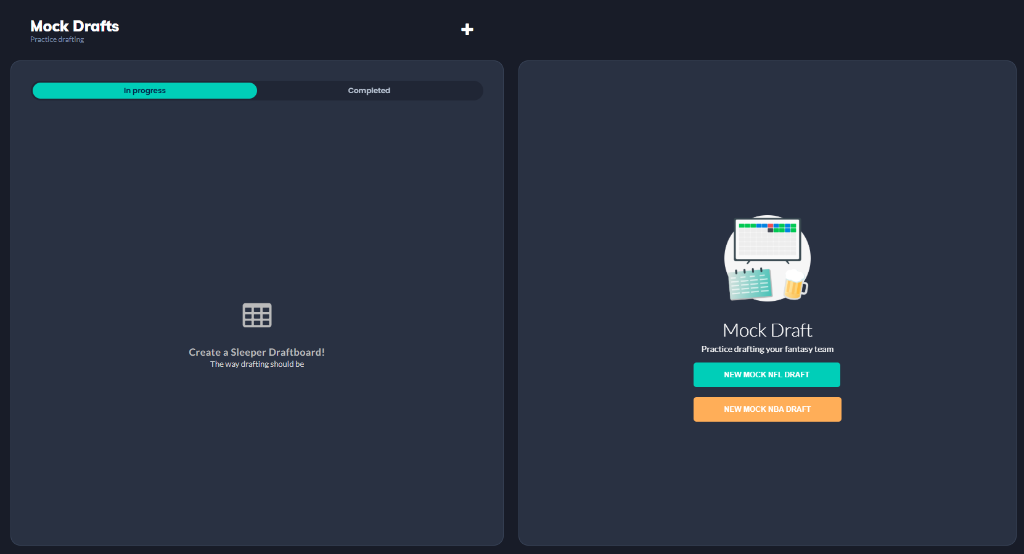
Being able to practice beforehand was incredibly helpful. In any real draft, there is always going to be that panic-inducing moment where the player you are targeting gets taken exactly one pick before yours. Because I had run through so many mock drafts, I was prepared for those exact scenarios. It allowed me to stay calm, rely on my practice, and pivot without frantically scrolling as the clock ticked down.
Part 3: The 2026 Draft Blueprint & Final Takeaway
If you are building your strategy for this upcoming season, here is the cheat sheet based on my roster autopsy:
- Draft for early volume: Anchor your roster with proven veterans. Rookies are luxury stashes, not Week 1 saviors.
- Balance your research: Use the spreadsheets to set your baseline, but don't ignore the tape watchers who spot breakouts early.
- Don't overcook: Trust the baseline projections for your lineups, keep your roster management simple, and don't hoard FAAB for a ghost.
My main piece of advice as we head into 2026? Understand that mistakes happen every single year. You are simply not going to make the perfect move at the perfect time every week. Fantasy football is messy, and perfection is a myth.
However, if you can genuinely learn from those mistakes—both your own and the blunders of other people—you give yourself the absolute best chance of winning your league.
The trophy doesn't go to the manager who drafts a flawless team. It goes to the manager who adapts the best. See you in the 2026 playoffs.